Tuesday, December 20, 2011

The Burdens to Economic Growth

During the past ten years, especially after 9/11/01, the US Government has taken a variety of measures to activate and improve the economy, including trying to control inflation, decreasing the interest rate on mortgage, and many others, which have temporarily leverage certain scenarios but have been unable to fully control the economic growth and more significantly its impact on the rest of the world, explicitly, on the global economy. In addition to the Euro crisis with the weakness in some European countries in the Euro zone, there are various other factors related to money exchange including China's valuation policies of their currency, and the trading factors indirectly affecting not only the USA but most significantly countries in developing countries in Africa and Latin America.

There various types of burdens, among them, I could highlight the following:
  1. The Legal Burden caused by Exacerbated Regulatory Compliance
    I pretty sure that the US Congress does a great job writing laws that will benefit the nation in the short and long terms. However, the implementation of regulatory compliance and deadline imposed had made the greatest impact on US economy, at least from the technology point of view. For instance, the ideal scenario that information systems, whether financial or medical or of some other sort, could legally comply with those regulations in record time, forced some sort of lack of adjustments on financial systems that had already suffered damage from the September 11 attacks. I believe that many systems were masked to comply, others were actually disrupted and never attained a perfect testing scenario, and many others are still in the process of achieving regulatory compliance. The outcome has been that the economy has also suffered from software error, beyond the human error, due to partial or inaccurate implementation, resulting in a severe factor affecting even some economic indicators, and I would even dare to say that at least some volatility is driven by this factor or as an indirect consequence. In fact, if information system failed to be accurate and does not transcend confidence this translates into information asymmetry, data inconsistency, lack of integrity, and business process error.
  2. The Political Anarchy
    In contrast, the inability of the three branches of government to further execute relevant economic measurements that would consistently improve the economy in conjunction with the social impact directed by those branches, especially, the legislative power, dramatically affected the resiliency of economic process recovery. A simple example is how much it takes to agree on a budget plan.
  3. The Homeland Security Model
    The homeland security model has increasingly become more expensive and rather than driving a good number of jobs is rather a source of continued unemployment. While we cannot compare this security model to the invasion of privacy taking place in other countries for the same reasons, it is obvious that the model precludes a good number of citizens from attaining clearance to get a job, while it also implicitly creates business constraints for corporations to hire professionals matching a specific job. The number of professional jobs created is not significant compared to the number of jobs that are automatically blocked by the above factors.
  4. Unemployment and Social Life
    Like in feudal times, machismo, feminism, and other lifestyle movements create a significant amount of investments for the private and public sectors that do not provide the best opportunities to the best candidates but rather to those that are to be protected under each ism circumstance, as convenient. So, today you could find the best men and women matching the right job unemployed simply because they did not fall in the frame of reference or at least as expected by both the private and public investment that lead to the planning and implementation of relevant failed strategies, resulting in less productivity and higher costs.
  5. The Business Landscape of Fear
    Without the individual's and business freedom to choose the best response and act economically freely, the outcome is that inaction overcomes the desire for action, in the expectation that time will make the situation better or magically heal it, which has not happened as of now.

Friday, October 7, 2011

The Global Economics of Film Making and Marketing

Hollywood Attacks...!

The US film-making market has greatly increased its production, acceptance, and ROI worldwide. Most recently, French television reported that nearly 47% of all movies currently on an European cinema room are American made, highlighting featured action, drama, violence, and thrilling topics. The average is computed in relation to all countries in Europe, including the entire European Union, the United Kingdom, and Eastern Europe. France came second with just over 35% of the market, followed by Germany, England, and Eastern Europe countries in much smaller percentages.
Beyond movie corporate revenue aggregate economics (i.e., onto a macro-economic model), the featured impact of Hollywood on economy relies on the fact that Holywood stars contribute to art societies and related charities, infant adoptions, and many actors seldom worry about getting their income tax return check.

Friday, June 10, 2011

The Economics of Healthcare (I)

AIDS and Management Economics of Global Pandemics

At a time when globla pandemics are taking place, I would like to take the time to provide some input o how governents and non-government organizations (NGOs) are dealing with AIDS, the avian flue, and other current ecoli epidemic taking place in Europe.

AIDS Forecasted Statistics Based on the 2004 WHO Global Report

At a moment where a well-defined, well-planned healthcare reform has become a topic of further debate in Congress, the USA is also ready to cut or reduce its support to Africa nations in their fight against AIDS and the HIV virus. In December 2004, the World Health Organization (WHO) released a worldwide report including historic categorized figures as well as importance aspects of disease control, prevalence, and factorial causes, including statistics by gender, and type of intercourse including men who have sex with woman, men who have sex with men, and women who have sex with women. Interestingly, the report revealed neglects in disease control due to lack of education mostly in countries of the third world, in particular, Sub-Saharan Africa, but also in a great portion of India. There were little reference between the overall ethics of a country or religiosity, but promiscuity also accounted as an important factor in the spread of this deadly disease. Surprisingly, another important factor related to the negligence in certain types of sex, such as oral sex, which is cited to be the most neglected and therefore, the most dangerous type, especially, among women who have sex with women. While oral sex can be cause of a simple yeast infection in the mouth, it can also expand to the human papaloma, all of which facilitates the spread of the HIV virus, and because of this, it is cited high in the prevalence of women who have sex with women. Being probably more dangerous than the chances of cervical cancer in a conventional inter-gender intercourse. Dr. Oz, the adroit medical advisor at Fox TV, has recently recommended for Americans to consider abstaining from having oral sex, as a new standard practice, as it is a factor in the development of oral cancer, as well, in conjunction with alcohol and cigarette usage.
Sub-Saharan Africa may face more difficult times, especially, in regions of high HIV prevalence. But without creating awareness regions where traditionally same-gender intercourse was not historic, the lack of education may further allow the spread of HIV/AIDS. Latin American is actually aware of the HIV/AIDS danger, but the lack of education and the practice of promiscuous activities among young people can lead to further disease spread.
The study does not explicitly discusses factors such as drug and alcohol among college students and other young people. However, it implicitly treats them as a form of negligence or promiscuity.
The following is an excerpt of one of my MBA's team project on the 2004 WHO report.

INTRODUCTION
 
 
When AIDS first emerged, nobody could have predicted how the epidemic would spread across the world and how many millions of lives it would change. There was no real idea what caused it, and consequently, no real idea how to protect against it. This paper will depict the prevalence of AIDS amongst different countries, what has been done to prevent the spread of the epidemic, the mortality rates in those countries and the global impact of this epidemic.
 
This paper will show the comparison between the figures of prevalence, expenditures and mortality rates in fifteen different countries and how this has affected the overall global structure against the population prevalent in these countries.
 
A key objective presented here is a Times Series basic model containing forecasts for the next few years, and an enhanced model considering other factors like interaction between grown, prevalence, and mortality, and the effect of AIDS education and existing and development drug treatment. The Time Series model utilized is an Auto Regressive Moving Average (ARMA)-like model which smoothes the population growth for each particular variable involved, such as the infected population, the disease periodic prevalence, the yearly death toll, and positive effects derived from AIDS education and treatment. It considers mortality the summary of a Bayesian model, where mortality is presented in terms of uncertain probabilities in addition to a hash algorithm. Additionally, the enhanced model is presented based on Oracle tables and data mining with relevant tools1.
 
PREVALENCE OF AIDS/HIV
 
What are HIV and AIDS?
A virus has been sweeping the world for the past two decades, causing a disease which has killed millions of people and which looks likely to kill millions more. The virus is called HIV which stands for Human Immunodeficiency Virus. After a period of time this virus begins to damage the immune system, and this is known as the disease AIDS. This time period varies, depending on factors such as access to drugs, and possibly such factors as nutrition, the presence of other medical conditions, and stress.
 
Understanding the epidemic
The term epidemic is used to refer to the rapid spread of HIV & AIDS across populations around the world. In order to understand the epidemic of HIV which is spreading across the globe, and the epidemic of AIDS which follows in it’s footsteps, it is necessary to look at certain figures. The figures we need include the number of HIV+ people in a country, the number of people with AIDS in a country, and the number of people who have died from AIDS-related conditions.
The epidemic of HIV and AIDS is a complicated and hugely important world issue. There has been a great deal of study into the medical and social aspects of the epidemic, which has generated a great deal of data. This information is often presented as long numbers, graphs and tables, and sometimes the terminology used can be quite technical. In order to turn the information into an understanding of the epidemic, you need to know what the data mean.
With reported figures, each number indicates an actual positive result for a person’s HIV test. This method of looking at the epidemic can give an extremely clear picture in terms of real people who have been affected by the virus – especially when looking at smaller areas. The problem with reported data is that it is sometimes hard to detect trends over time, especially when looking at recent years. Reports of positive HIV tests can sometimes take months, or a few years, to reach a central agency which compiles the total figure.
Significance of the Facts and Figures of prevalence of HIV/AIDS
As of the end of 2003, an estimated 37.8 million people worldwide - 35.7 million adults and 2.1 million children younger than 15 years - were living with HIV/AIDS. Approximately two-thirds of these people (25.0 million) live in Sub-Saharan Africa; another 20 percent (7.4 million) live in Asia and the Pacific.(1)
 
Worldwide, approximately 11 of every 1000 adults aged 15 to 49 are HIV-infected. In Sub-Saharan Africa, about 7.5 percent of all adults in this age group are HIV-infected. Woman account for nearly half of all people worldwide living with HIV/AIDS. (1)
 
An estimated 4.8 million new HIV infections occurred worldwide during 2003; that is, about 14,000 infections each day. More than 95 percent of these new infections occurred in developing countries.(1)
 
In 2003, approximately 1,700 children under the age of 15 years, and 6,000 young people aged 15 to 24 years became infected with HIV every day.(1)
 
More than 20 million people with HIV/AIDS have died since the first AIDS cases were identified in 1981.(1)
 
In 2003 alone, HIV/AIDS-associated illnesses caused the deaths of approximately 2.9 million people worldwide, including an estimated 490,000 children younger than 15 years. (Reference: http://www.cdc.gov/hiv/stats.htm)
 
Prevalence of AIDS in different countries:
 
U.S.A
HIV and AIDS have been around in the United States for more than 20 years. The epidemic has now spread to every part of the USA and to all sectors of society.
In order to monitor the spread of the epidemic and to assess the need for services and resources, there is a need for accurate surveillance. In the USA, statistics on both HIV and AIDS are collected by the Centers for Disease Control and Prevention (CDC) and published in an annual report.
At the end of 2003, the CDC estimates that 9,50,000 persons were living with AIDS in the USA. (Refer: Appendix 1 Table)
Of these,  
  • 36% were white
  • 42% were black
  • 20% were Hispanic
  • 2% were of other race/ethnicity.
Of the adults and adolescents1 with AIDS, 77% were men. Of these men,
  • 58% were men who had sex with men (MSM)
  • 22% were injection drug users (IDU)
  • 11% were exposed through heterosexual contact
  • 8% were both MSM and IDU.
 Of the 88,815 adult and adolescent women with AIDS,
 63% were exposed through heterosexual contact
  • 35% were exposed through injection drug use.
 
An estimated 1,998 children were living with AIDS at the end of 2003. (Reference: http://www.avert.org/statindx.htm)
 
U.K
An estimated 56,122 adults were living with HIV in the UK at the end of 2003, of whom 14,300 (27%) were unaware of their infection.
In 2003, there were 6,780 new diagnoses of HIV, since the epidemic began.
As of September 2004, there have been 20,778 diagnoses of AIDS in the UK. It is known that at least 512 of these people have died. It should be noted that the difference between these figures does not provide a very accurate estimate of the number of people living with AIDS in the UK. The figure will inevitably include some people who have moved abroad after diagnosis as well as some records belonging to the same person which have not been successfully matched. (Reference: http://www.avert.org/statindx.htm)
 
CANADA
 
At the end of 2003 there were an estimated 56,000 people in Canada living with HIV (including those living with AIDS).1 Of these, perhaps one third were unaware of their infection.2
 
From the start of testing in November 1985 until the end of June 2004, there have been 56,523 positive HIV tests reported to CIDPC (Centre for Infectious Disease Prevention and Control). In 2003, there were 2,499 positive test results.

Friday, May 20, 2011

On the Economy of the Few

Is the Economy Waking Up?

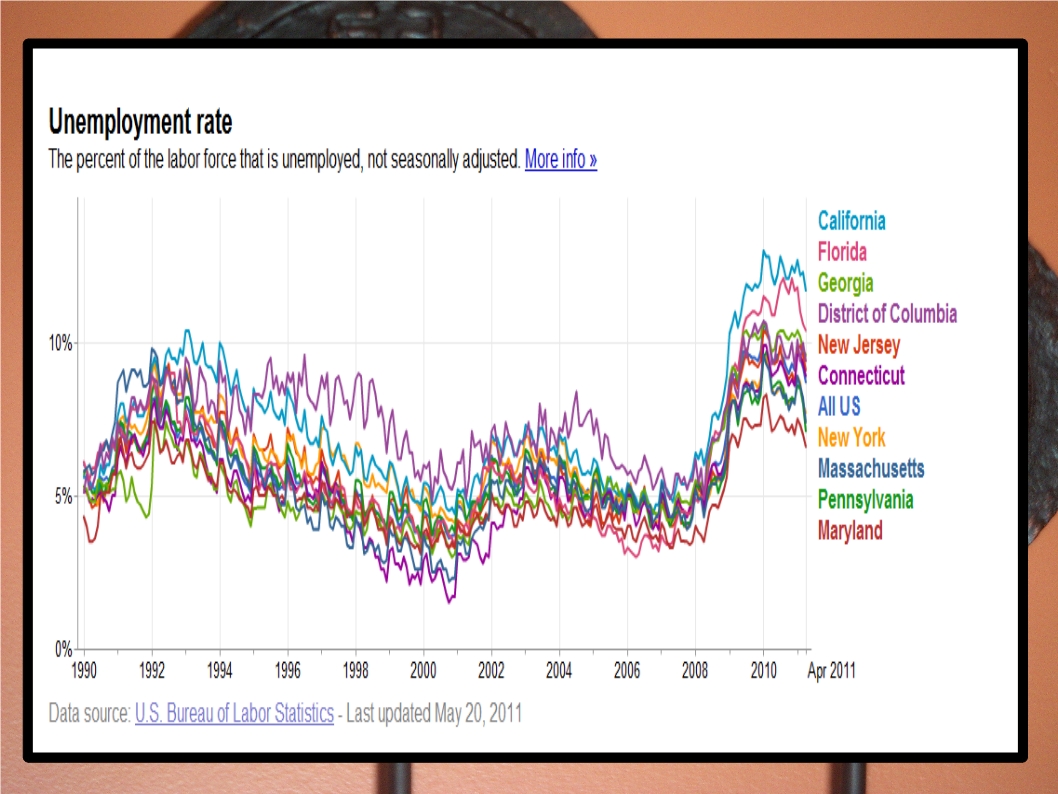
A few months ago when I stopped writing this blog, I was writing an article about the impact of the soccer economy by the time a decision about the world cup was being taken. The outcome was that the disappointing and I decided not to publish it, triggered by the current economy of the few. The economy of the few investing people is suggesting that the economy is recovering when in fact the actual unemployment rate is over 16% while reported just fairly over 9%. The economy of the few has also disregarded the increase of the poverty level in the United States and its territories, and the difficulties in distribution due to serious problems like inflation; most likely, a direct result of uncontrolled gas price increases. For most, the gas price is in itself a war tax. But within the world economy crisis, it appears that the US economy is gaining momentum.

I anticipate that the Dow Jones index record will be surpassed once more, but this will not become a real economic indicator for the entire nation, but another record for the rich to get richer and the poor, poorer, leaving also most of the middle class unprotected; that a selected group will get jobs, and the undesirable professional not matching the corporation ethics will remain unemployed; that MBA graduates will need to keep their ethics for themselves and look for work somewhere else in a third class employment; that IT will generate 50,000 jobs for new comers, as stated by President Obama while visiting India, while leaving the vast majority of IT professionals once more either unemployed or underemployed and underpaid. So the large economy should look at unemployment, distribution failure, and index of poverty as key economy indicators, and the relevant institutions should do something about making Americans live a better life, more congruent will America's self image, more congruent with reducing and eliminating a 14.3 trillion dollar external debt, that may become unpayable. When I arrived in the United States about 20 years ago, that debt was about 2.5 trillion, as I recall today.

Wednesday, June 2, 2010

Red Carpet for the American Economy

The vision that the US economy has essentially depended on Wall Street and Hollywood does really rely on the enormous contribution of the small enterprise, where entrepreneurs actually provide a significant amount of innovation, business development, and the perspective to attain the American dream. However, I believe that there is not a significant extension or expansion to Hollywood opportunities. For instance, the 3D movie market and the related technology has barely started to expand with the constraints impacting human life, perception, and overall human psychology, as well as concerns about youth development and vision-related issues. The fact is also that there could possibly be further integration between Hollywood and other entertainment centers like Las Vegas. I believe, however, that this is not clearly happening since Las Vegas is likely to be using a razor-blade strategy where hotel and transportation are relatively inexpensive but the cost of living associated with food and prime needs is above that of other cities like New York. Las Vegas has focused also on live entertainment in addition to its gambling economy.

My point is simple: Perhaps economists would agree that Hollywood is the dominant center of entertainment but it has to create further motivation and awareness for entrepreneurs and venture capitalists to get further involved in getting it done better and with more flexible options. There are many movies which have achieved prompt success, without having the support of other media like Television, as in the scenario of Sex and the City, or young contributions such as the work Mother and Child, directed by Garcia Marquez's son Rodrigo GarcĂ­a Barcha, but it is obvious that both American and foreign investment, in Hollywood and the entertainment industry is a valid approach to balance the load on the path to economic recovery and success. So, I wonder who will be the next Avatar in the US economy.

Monday, April 5, 2010

The Importance of Being Green


Capitalizing on eco-friendly corporate strategies has become a major concern for large and mid-size companies and also gradually being part of approach in the small enterprise. However, in spite of government and NGO efforts, sustainability is probably the greatest concern, which has affected both developed powers, obviously the USA and leading European countries, with a variety of technologies such as electric vehicles, air-generated energy; emerging economies like Brazil which has attained a remarkable regional leadership on biofuels, and developing countries like Colombia where the usage of mixing polymers with petrochemicals and natural gas is being greatly applicable in public transportation leveraging its operating cost.

Among the productivity strategies, it is possible to highlight those focused to optimize the eco-efficiency, and others targetting lower costs, i.e., eco-cost, controls. Likewise, other strategies focus on being a differentiator, including being above compliance and simply participating as an eco-friendly strategist. McDonald is a good example of the eco-cost approach and also an eco-friendly strategist, which characterizes its products and services like several other identifiable companies. On the other hand, eco-efficiencies and attaining compliance can characterize the operating business processes, and are likely to determine productivity objectively, both under Porter's differentiating focus or the Resource-Based View (RBV) perspectives.

The interesting aspect of being green is that it usually is contrast with a diversity of opinions and political perspectives which results in the delay of implementing regulatory and compliance policies that can be used globally, such as, those affecting the control of global warming. The Kyoto protocol and the recent ecology summit are an example by the predominant economic powers suggest that there is plenty of areas to cover and dimensions to expand consistently to attain those policies. NGO can also apply independent practices that will drive emerging and developing countries to further motivate developed countries with greater corporate social responsibility.

In the innovative information technology world, strategies such as virtualization, grid computing and cloud computing (in any of its flavors, namely, Software as a Service or SaaS; Platform as a Service or PaaS; or Infrastructure as a Service or IaaS) have all contributed to driving greener IT environments that can reduce and optimize both the Capital Expenditures (CAPEX) and the Operating Expenditures (OPEX).

Thursday, September 17, 2009

Price Indexing and Economic Politics

1. I wonder if sometime in the future the price index theory will have to be rewritten or deeply readjusted: A German woman whom I met in Paris is greatly pleased with her studies there, yet she complains about the cost of living. She suggests that a good point of comparison is canned soda, which in Germany sells for about .75 euros while it averages nearly 3 euros and is around 4.50 euros plus tips in restaurants and upscales places, in general. Price indexing has been one of the bottlenecks the euro had to confront in its early stages and cause both cultural and socio-economic tensions in relation to commodities such as gas and oil, and was a factor is the French nay vote over the EU constitution. I believe that the price of gas was cheaper in countries, such as Spain, and much more expensive in Germany; therefore, making a budget to travel driving your own car or by renting a car may not be an easy task. As I recall from my study on money exchange, in the earlier stages the euro was weaker against the Japanese Yen and the dollar when not existing as actual notes, currency bills or hard coins. This has made it more difficult for other currencies such as the American dollar and British pound to take any advantage from the real diversity of values of the euro in each one of its instances. In relation to the soda market, almost a clear duopoly, as initially described by Cournot, it clearly suggests that the euro has brought great economic tensions and that working towards leveraging the prices to a more realistic value could objectively improve the economic politics in the international landscape. This is so certain that historically money exchange can greatly affect developing countries, such as South American countries, but much more African nations, which have no realistic revenues from their exports or related investments. However, conversely it may benefit European investments in developing countries, some of which are using the euro as standard in lieu of the American dollar, in particular, in the hospitality business.

2. The irrationality seems to be taking care of the South American politics and diplomacy. While Venezuela has been widely investing in war aircrafts and other related hardware for quite sometime, it is probably neglecting that a few years from now oil may become a deprecated commodity due to disrupting technologies. With the current comprehensive research on bio-fuels, solar, and other termal forms of energy, and the development of electric vehicles and other relevant powering technologies, it is quite likely that there will be less demand for oil and that this commodity will become part of a vertical specialized market rather than as it exists today, widely horizontal. Rather than warefare, I wish that there is more thought towards the planning of a country whose educational system is slightly below the average South American country as I have directly learned from friends and relatives who have had the learning experience there. My greatest concern is that the name of the economic system should no longer be an issue to disrupt the world peace. Even presidents Reagan and Gorvachev had the opportunity to fingerpoint one-another in relation to the positive and negative aspects of each system. The point is that the world needs more rational leaders and fewer arrogant dictatorships or alike. Indeed, I also believe that democracy should prevail over the socio-economic system itself.